
Shedding Light on Lumens, Flux, Intensity, and Lux: Understanding Headlamp Brightness

When it comes to headlamps, understanding the terminology used to describe their brightness can be illuminating. Terms like lumens, flux, intensity, and lux are often used to quantify a headlamp's output, but what do they really mean? In this guide, we'll shed light on these terms and explore how they are used to measure and describe the brightness of a headlamp.
Lumens:
Lumens are a measurement of the total amount of visible light emitted by a source, such as a headlamp. In simple terms, the higher the lumen rating, the brighter the light. When comparing headlamps, the lumen rating can give you a general idea of how bright the light will be. However, it's essential to consider other factors like beam pattern and the quality of the light for a comprehensive understanding of brightness.

Flux:
Flux is the total amount of light energy emitted by a source, measured in lumens (lm). It's a measure of the overall brightness of a headlamp. Flux takes into account not only the intensity of the light but also its distribution. A headlamp with a high flux rating will provide a bright, even light across a wide area, making it ideal for tasks that require good visibility over a large area.
Intensity:
Intensity refers to the concentration of light in a specific direction. It's measured in candelas (cd), which is a unit of luminous intensity. In the context of a headlamp, intensity tells you how focused or dispersed the beam of light is. A high-intensity headlamp will have a tightly focused beam that can reach long distances, while a lower-intensity headlamp may have a broader beam that provides more general illumination.

Lux:
Lux is a measure of illuminance, which is the amount of light that falls on a surface. It's calculated by dividing the total luminous flux (in lumens) by the area of the surface (in square meters). In the context of a headlamp, lux tells you how bright the light will be at a specific distance from the source. A headlamp with a high lux rating will provide a bright, concentrated beam of light at a significant distance.
Understanding terms like lumens, flux, intensity, and lux can help you make an informed decision when choosing a headlamp. By considering these factors alongside other features like beam pattern and battery life, you can find a headlamp that meets your specific needs for brightness and illumination. Want to take an even deeper dive? Check out LumaLab’s latest video with our lead engineer, Ryan Walsh, as he explains and demonstrates these terms in more detail.
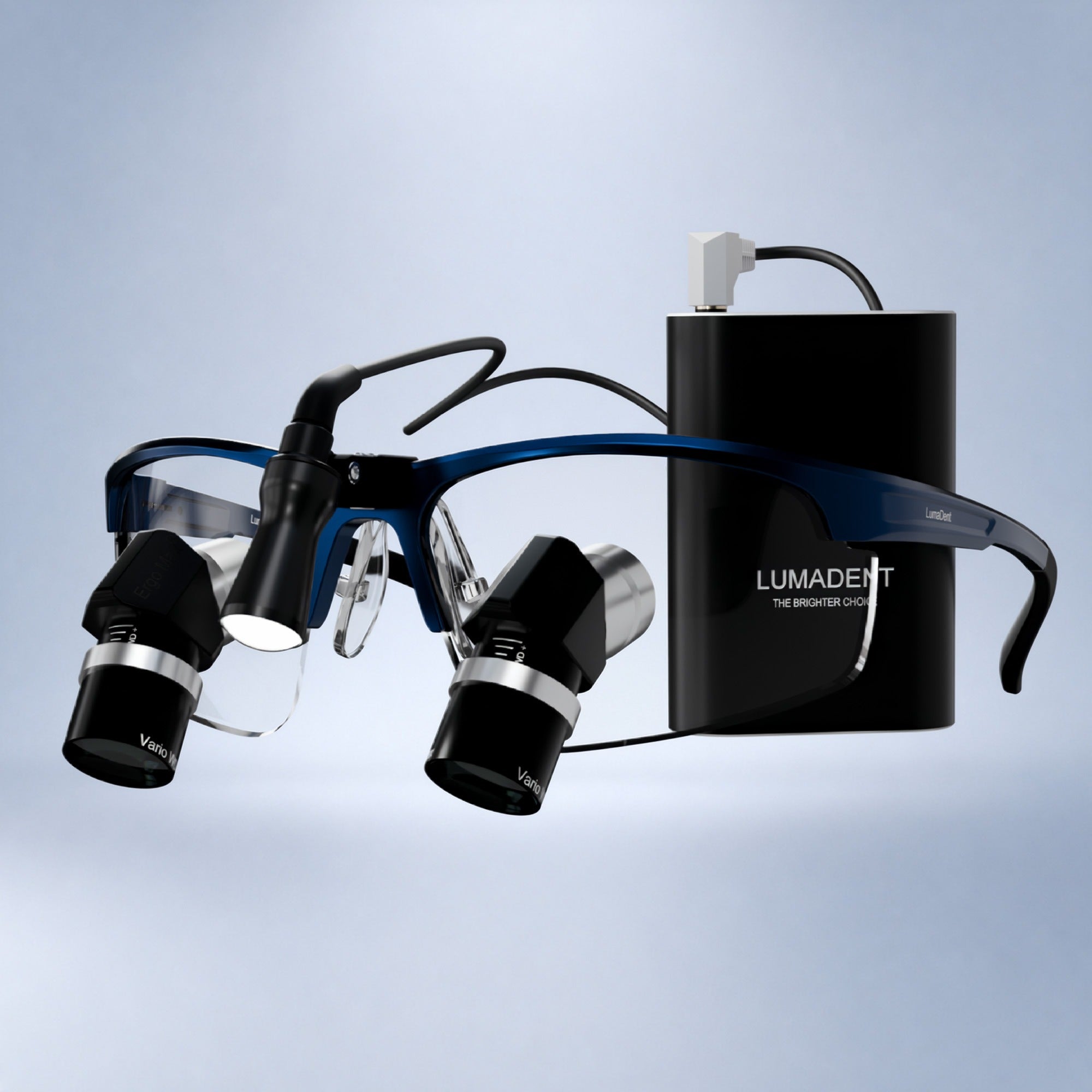
When it comes to superior illumination and precision, look no further than LumaDent. Our award-winning headlight packages are meticulously designed to offer exceptional brightness, clarity, and comfort, empowering professionals across various industries. Explore our range of headlight packages to experience the difference that advanced lighting technology can make in your work.

Share:
Why the New Year is a Great Time for a Career Change
The Story Behind Our Loupes Patent